
DOM88 ⭐ Nhà Cái DOM88.com Uy Tín Chính Thức 2026
Dom88 – Nền tảng trò chơi online đang nổi tiếng tại thị trường Việt. Với giao diện thân thiện, kho game đa dạng cùng hệ số trả thưởng cao, thương hiệu sẽ là điểm dừng chân khó bỏ qua của mọi người chơi. Chỉ cần truy cập website ddc-i.nl và đăng ký tài khoản, bạn sẽ được chơi game không giới hạn.
Nguồn Gốc Của Nhà Cái Bóng Đá Dom88
Dom88 là một đơn vị giải trí trực tuyến được xây dựng với mục tiêu mang đến cho người chơi một sân chơi hiện đại, đáp ứng mọi nhu cầu giải trí. Thương hiệu được vận hành bởi công ty quốc tế chuyên về công nghệ game online, hiện đang hoạt động chủ yếu ở thị trường châu Á, trong đó có Việt Nam.
Tên gọi này không chỉ đơn thuần chỉ thương hiệu mà còn mang giá trị biểu tượng. Trong đó “Dom” mang ý nghĩa ngôi nhà, thể hiện mục tiêu xây dựng không gian giải trí an toàn, kết nối mọi thành viên. Còn con số “88” đại diện cho sự may mắn, thịnh vượng. Sự kết hợp này đã thể hiện thông điệp đơn vị luôn là một ngôi nhà giải trí mang đến sự may mắn và thành công.
Ngay từ những ngày đầu phát triển, Dom888 đã chú trọng xây dựng một hệ thống ổn định. Hiện nay đơn vị sở hữu hệ thống trò chơi đa dạng với dịch vụ hỗ trợ khách hàng tận tâm. Đây cũng là lý do giúp nhà cái nhanh chóng khẳng định được vị thế của mình trên thị trường công nghiệp giải trí đang đầy cạnh tranh.
Tính Hợp Pháp Của Nhà Cái Dom88 Online
Dom88 là một trong số ít thương hiệu cá cược trực tuyến hoạt động hợp pháp, có giấy phép kinh doanh rõ ràng. Nền tảng hiện đang sở hữu giấy phép kinh doanh được cấp bởi tổ chức quản lý trò chơi uy tín quốc tế – PAGCOR. Chính giấy phép này đã thể hiện sự công nhận chính thức và khẳng định hoạt động của nền tảng là hợp lệ.
Với sự giám sát chặt chẽ của cơ quan cấp phép, mọi người chơi hoàn toàn có thể tin rằng kết quả game, tỷ lệ cược hay hệ thống thanh toán đều vận hành chính xác, không chịu sự can thiệp hay có yếu tố gian lận nào. Giấy phép này cũng thể hiện nền tảng đã trải qua một quá trình kiểm duyệt nghiêm ngặt trước khi được cấp phép.
Việc sở hữu giấy phép này đã giúp thương hiệu khẳng định được vị thế của mình trên thị trường. Đồng thời góp phần tạo dựng niềm tin vững chắc trong lòng người chơi. Nó không chỉ là bằng chứng năng lực tài chính mà còn thể hiện cam kết lâu dài trong việc xây dựng một không gian chơi game minh bạch.
Dịch Vụ Và Sản Phẩm Dom88 Cung Cấp
Một trong những lý do giúp nhà cái Dom88 dù mới hoạt động nhưng đã trở thành điểm đến không thể bỏ qua của cộng đồng người chơi chính là kho game đa dạng. Và nhằm giúp thành viên tìm kiếm game phù hợp theo sở thích, thương hiệu đã phân loại thành từng danh mục riêng biệt. Cụ thể:
Cá Cược Thể Thao
Nhà cái Dom88 mang đến kho thể thao đỉnh cao với vô vàn kèo cược mỗi ngày. Bạn có thể tham gia dự đoán bóng đá, tennis, bóng rổ, bóng chuyền, thể thao điện tử… Thương hiệu cũng đã cung cấp những nền tảng trải nghiệm an toàn hơn bao giờ hết: SABA Sports, CMD368, SBOBET, IM…
Điểm nổi bật của hạng mục này nằm ở tính minh bạch và khả năng cập nhật kết quả trận đấu cực nhanh. Đối với bóng đá, thương hiệu cập nhật hàng loạt mùa giải khác nhau như Ngoại hạng Anh, Champions League, World Cup… Chế độ xem trực tiếp cùng tính năng đặt cược nhanh hứa hẹn mang đến những trải nghiệm ưu việt.
Sòng Bạc Dom88 Trực Tuyến
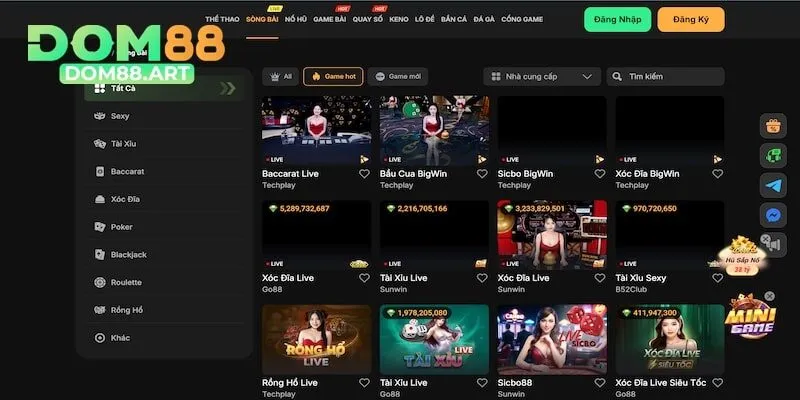
Sảnh game casino tại nhà cái quy tụ nhiều gương mặt quen thuộc, nổi tiếng hàng đầu. Có thể kể đến như AE Casino, WM Casino, SA Gaming, Evolution Gaming. Bạn sẽ được khám phá thế giới đỏ đen với hình ảnh sắc nét cùng nhanh chóng hoà mình vào không gian sôi động với các dealer xinh đẹp.
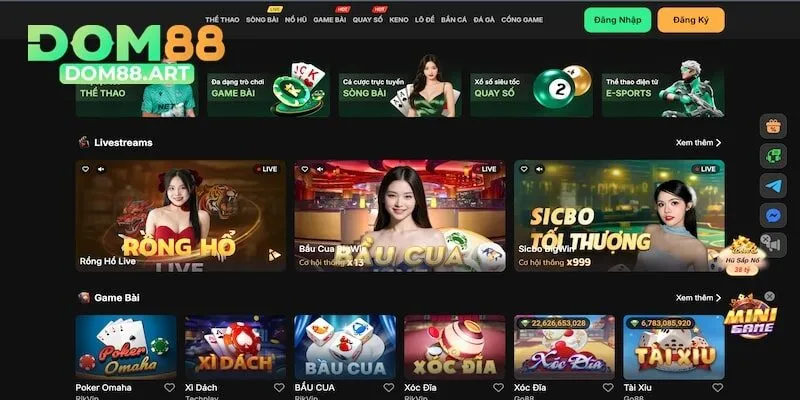
Dom88 Club gây ấn tượng với người chơi nhờ hệ thống livestream cực chất. Giao diện được thiết kế đơn giản, tối ưu thao tác đặt cược nhằm tiết kiệm thời gian và đảm bảo không giật lag. Mỗi sảnh game có nhiều phòng chơi riêng biệt, cho phép thành viên lựa chọn theo sở thích cá nhân và nguồn tài chính.
Quay Số Thử Vận May
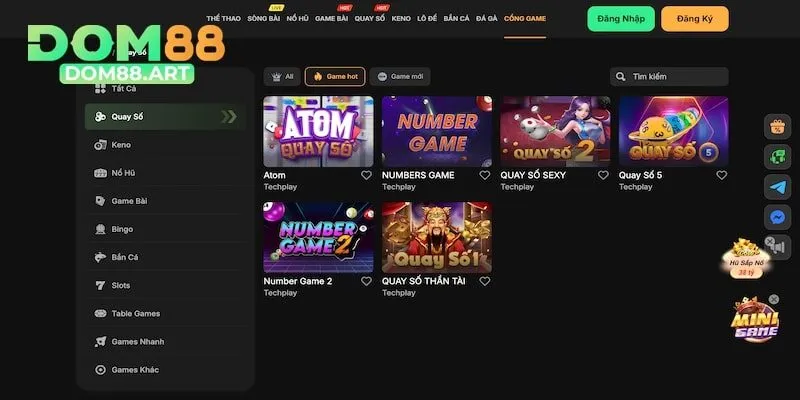
Dịch vụ này được Dom88 tập trung vào những tựa game may rủi siêu sôi động và có tiền thưởng hấp dẫn. Khi tham gia, bạn có nhiều lựa chọn khác nhau như Number Game, Keno, xổ số siêu tốc… Game được thiết kế nhanh gọn, giúp bạn có thể tham gia nhiều phiên khác nhau và nhận thưởng nhanh chóng.
Đặc biệt trong sản phẩm này, nhà cái còn cung cấp nhiều hình thức quay số theo phong cách châu Á, châu Âu. Game đa dạng luật chơi và cách đặt cược nên người tham gia có thể thoải mái nghiên cứu và không cảm thấy nhàm chán. Chỉ cần truy cập vào website chính thức và đăng ký tài khoản, bạn sẽ được chơi game không giới hạn.
Slot Game Nổ Hũ
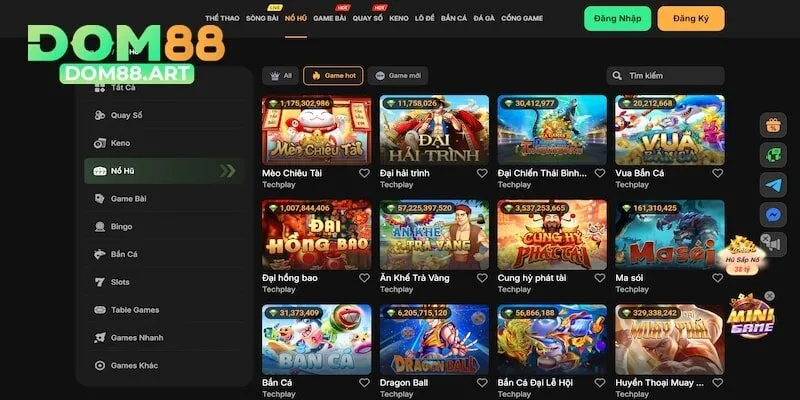
Nhà cái Dom88 đã đầu tư mạnh vào những tựa game slot khi liên kết hợp tác với nhiều gương mặt uy tín. Có thể kể đến một số cái tên nổi bật như JILI, Pragmatic Play, JDB, MG hay CQ9. Thành viên được lựa chọn nhiều chủ đề khác nhau, ví dụ là phiêu lưu kho báu, cảm nhận văn hoá Á Đông hay khám phá thần thoại Hy Lạp.
Khi đến với hạng mục này, bạn không thể bỏ qua một số cái tên nổi tiếng như Mahjong Ways, Lucky Neko, Roma X, Golden Dragon, Candy Burst. Không chỉ vậy, chuyên mục còn thu hút người chơi khi sở hữu nhiều tính năng đặc biệt. Có thể kể đến như vòng quay may mắn, jackpot cộng dồn hoặc thưởng x2 đến x5.
Game Bài Dom88 Trực Tuyến
Kho game bài chơi Dom88 luôn quy tụ đầy đủ những trò chơi mà người chơi Việt luôn yêu thích. Với sự hợp tác cùng nhiều gương mặt uy tín, thương hiệu hứa hẹn mang đến không gian đấu trí hấp dẫn. Một số tựa game kinh điển có thể kể đến như Tiến Lên Miền Nam, Phỏm, Liêng, Xì Tố, Poker…
Ngoài ra, game bài của nhà cái còn có tính năng kết nối với bạn bè, chat trực tuyến và tặng quà trong game. Chuyên mục luôn có hệ thống chống gian lận, đảm bảo tạo nên những ván đấu minh bạch, công bằng. Đây sẽ là nơi giúp bạn giải toả căng thẳng và thử thách bản thân với những đối thủ nặng ký.
Lô Đề Xổ Số
Thương hiệu Dom88 luôn là điểm dừng chân quen thuộc với những ai yêu thích lô đề và xổ số trực tuyến. Tại đây bạn có thể lựa xổ số miền Bắc, xổ số miền Nam, Mega, xổ số siêu tốc… Website luôn cập nhật kết quả chuẩn và nhanh chóng từ đài chính thức. Cam kết không sai lệch và ngăn chặn mọi tool hack bên ngoài.
Điểm mạnh của chuyên mục này là cho phép thành viên vừa có thể tham gia xổ số truyền thống theo khung giờ cố định. Vừa có thể linh hoạt trải nghiệm xổ số siêu tốc với kết quả được tung ra chỉ sau 1 đến 5 phút. Tỷ lệ trả thưởng hấp dẫn, giao diện khoa học thân thiện sẽ là sự lựa chọn hoàn hảo cho người chơi.
Đá Gà Đối Kháng Dom88 Club
Nhằm mang đến dịch vụ chất lượng nhất, các trận đấu đá gà Dom88 luôn được thương hiệu truyền hình trực tiếp tại các trường gà nổi tiếng trong khu vực Philippines, Campuchia và Thái Lan. Qua đó đảm bảo sẽ mang đến cho người chơi một trải nghiệm kịch tính và chân thực hơn bao giờ hết.
Thành viên có thể lựa chọn đặt cược dưới nhiều hình thức khác nhau: Chọn gà thắng, chọn hoà hay chọn theo một tỷ lệ nào đó. Với đường truyền vận hành bằng công nghệ cao nên hình ảnh truyền tải luôn đảm bảo sắc nét. Tuyệt đối không xảy ra tình trạng bị gián đoạn khi bạn đang đặt cược.
Bắn Cá Nhập Vai
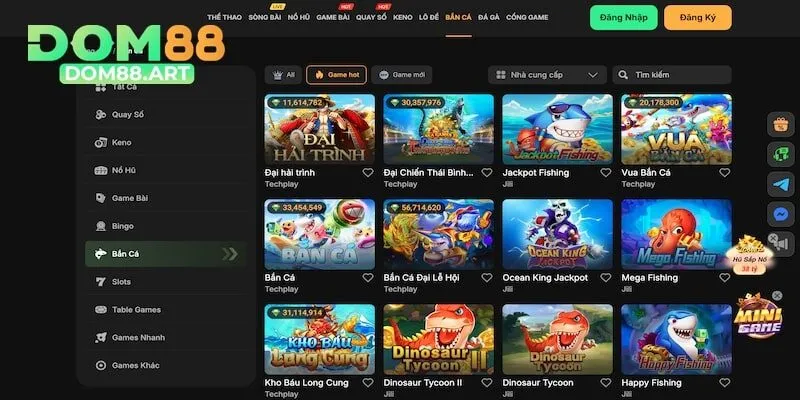
Chuyên mục bắn cá Dom88 đã quy tụ đủ những sảnh game hot nhất nhì thị trường như JDB Fishing, Spade Gaming, CQ9 Fishing… Giao diện game được thiết kế sống động với hình ảnh 3D sắc nét, âm thanh chuyển động linh hoạt theo từng thao tác. Với game, bạn sẽ hoá thân thành những người thợ chuyên nghiệp.
Bên cạnh yếu tố giải trí, chuyên mục này còn mang yếu tố chiến thuật khi người chơi cần phải tính toán, lên kế hoạch săn cá. Cụ thể bạn cần phải tính toán loại súng, nghiên cứu tốc độ bắn và lựa chọn mục tiêu sao cho phù hợp. Thương hiệu cũng đã đưa ra những cấp độ chơi đa dạng như: Cấp dễ, cấp trung bình và cấp độ khó.
Hướng Dẫn Cách Tham Gia Nhà Cái Dom88
Với giao diện thân thiện, trang web sẽ giúp người dùng có thể thao tác nhanh chóng. Tuy nhiên với những người chơi mới thì bạn chưa nắm rõ cách thực hiện cũng như chưa biết cách trải nghiệm game. Do đó hãy cùng tìm hiểu 4 bước để có những giây phút chơi game an toàn nhất tại nền tảng!
Bước 1: Dom88 Đăng Nhập
Để tham gia khám phá các dịch vụ mà thương hiệu cung cấp, người chơi cần phải tạo tài khoản cá nhân. Trước hết, hãy truy cập vào website chính thức của đơn vị, sau đó nhấn vào mục “đăng ký”. Lúc này, hệ thống sẽ hiển thị một form mẫu, nơi mà người dùng cần click vào ô trống để điền các thông tin cá nhân.
Chú ý rằng những thông tin mà người chơi cung cấp cho Dom88 phải đảm bảo chính xác. Vì nếu không sẽ khiến việc chơi game và sử dụng dịch vụ sau này của thành viên bị gián đoạn. Hoàn thành việc điền thông tin, hãy dành thời gian kiểm tra lại dữ liệu và nhấn “đăng ký” bên dưới là xong.
Bước 2: Nạp Tiền Dom88
Sau khi đăng ký thành công, nhiệm vụ tiếp theo của người chơi là nạp tiền để đặt cược. Nhà cái đã hỗ trợ thành viên hoàn thành giao dịch với thời gian nhanh nhất thông qua nhiều phương thức thanh toán lí tưởng. Có thể kể đến như sử dụng ngân hàng, thẻ cào điện thoại hay quét mã QR tiện lợi.
Bạn cần chọn vào danh mục “nạp tiền”, sau đó điền số tiền mong muốn và chuyển đến kênh thanh toán phù hợp. Sau khi tiếp nhận thông tin của khách hàng, hệ thống Dom88 Com sẽ xử lý giao dịch trong vòng vài phút. Toàn bộ quá trình này sẽ được thực hiện bằng nền tảng bảo mật SSL hiện đại, giúp thông tin luôn được bảo vệ tốt.
Bước 3: Trải Nghiệm Dom88
Khi tài khoản game Dom88 đã có số dư, người chơi có thể tham gia trải nghiệm. Kho game thương hiệu mang đến luôn có nhiều loại hình khác nhau như cá cược thể thao, casino trực tuyến, slot, game bài, bắn cá… Bạn cần lựa chọn sản phẩm yêu thích, chọn sảnh game để có thể tham gia ngay.
Thấu hiểu rằng nhu cầu của khách hàng luôn thay đổi nên thương hiệu luôn trong trạng thái cập nhật mọi tựa game mới mọi lúc mọi nơi. Bạn có thể thử trải nghiệm với mức cược nhỏ để dần dần làm quen với phòng game và luật chơi. Yên tâm rằng tất cả tựa game nền tảng cung cấp đều có luật và cách chơi rõ ràng.
Bước 4: Thanh Toán Dom88
Khi đã thắng cược và muốn rút tiền, người chơi quay trở lại giao diện chính thức và chọn “rút tiền”. Tại Dom88, bạn cần cung cấp cho nhà cái thông tin ngân hàng cá nhân. Lưu ý rằng chủ sở hữu của tài khoản ngân hàng này phải có họ và tên trùng khớp với dữ liệu mà người chơi đã đăng ký trước đó.
Nhà cái hỗ trợ hội viên thanh toán tiền thưởng qua nhiều ngân hàng tại Việt Nam như MSB, Techcombank, BIDV… Đồng thời nền tảng cũng đảm bảo các giao dịch diễn ra nhanh chóng và an toàn. Thông thường, chỉ mất khoảng 5 đến 15 phút là tiền sẽ được gửi đến ngân hàng người chơi cung cấp.
Sứ Mệnh Và Lời Cam Kết Của Dom88
Nhà cái Dom88 được thành lập với sứ mệnh mang đến cho người chơi một không gian giải trí trực tuyến vô cùng hiện đại, an toàn và minh bạch. Ngay từ khi bước vào thị trường, đơn vị đã định hướng rõ ràng rằng mọi sản phẩm, dịch vụ đều phải hướng tới trải nghiệm tốt cho khách hàng.
Nền tảng mong muốn rằng bản thân không đơn thuần chỉ là một nhà cái. Mà còn là một điểm đến đáng tin cậy, nơi mọi người chơi có thể yên tâm tận hưởng niềm vui cá cược mà không cần lo lắng về vấn đề rủi ro, hay gian lận. Đồng thời, Dom888 cam kết duy trì hệ thống bảo mật tiên tiến và sử dụng công nghệ hiện đại nhất.
Ngoài việc đầu tư vào hạ tầng kỹ thuật, nhà cái còn chú trọng xây dựng một đội ngũ chăm sóc khách hàng tận tâm. Nhân viên luôn sẵn sàng hỗ trợ, giải đáp mọi thắc mắc 24/7. Điều này đã thể hiện thương hiệu có tinh thần, trách nhiệm với mỗi khách hàng.
Về mục tiêu, nhà cái hướng đến phát triển cộng đồng giải trí văn minh và lành mạnh. Đơn vị đã thường xuyên triển khai các hoạt động khuyến mãi và luôn tổ chức công bằng. Hoạt động không chỉ là một cách tri ân khách hàng mà còn gắn kết mọi thành viên, tạo nên nguồn thu nhập mới.
Đánh Giá Dom88 Chân Thực Từ Khách Hàng
Sau một thời gian hoạt động, Dom88 vinh dự khi nhận được nhiều phản hồi tích cực từ người chơi. Đa số thành viên đều cho rằng đây là một nhà cái uy tín, mang lại trải nghiệm đa dạng và có tính ổn định. Bạn có thể tham khảo một số lời nhận xét, phản hồi sau.
- Anh Hoàng Minh, người Hà Nội: “Tôi đã tham gia trải nghiệm trên nhiều nền tảng khác nhau nhưng đây là đơn vị để lại ấn tượng sâu sắc nhất. Vấn đề nạp rút được giải quyết nhanh chóng và nhân viên luôn hỗ trợ nhiệt tình.”
- Bạn Tuấn Kiệt, đến từ Thành phố Hồ Chí Minh: “Sau một thời gian trải nghiệm, tôi quyết định gắn bó lâu dài với thương hiệu. Vì nhà cái hoạt động minh bạch và bảo mật thông tin siêu an toàn cho người chơi. Tại đây dữ liệu cá nhân của tôi luôn được mã hóa chặt chẽ.”
- Chị Hoàng Yến, làm việc tại Hải Phòng: “Ban đầu tôi đến với nhà cái vì game đa dạng, có thể giúp tôi giảm căng thẳng, áp lực trong công việc. Tuy nhiên, sau đó tôi phát hiện đơn vị còn có thể trở thành một nguồn thu nhập mới nhờ vào hệ số trả thưởng cực cao”.
- John Dang, du học sinh người Anh: “Tôi được bạn bè giới thiệu đến thương hiệu này. Đánh giá ban đầu là giao diện thân thiện, tuy nhiên sau đó còn phải “trầm trồ” vì sự đầu tư. Tốc độ đường truyền nhanh, game load mượt, chuẩn tiêu chí quốc tế.”
Dom88 Có Những Hoạt Động Khuyến Mãi Hot Nào?
Không chỉ có kho game hấp dẫn, Dom88 còn được đánh giá cao khi tổ chức nhiều hoạt động khuyến mãi thú vị. Dưới đây là 5 sự kiện không thể bỏ qua khi bạn trở thành hội viên chính thức của nền tảng:
- Khuyến mãi nạp 100% thưởng tới 20 triệu: Chương trình áp dụng cho người chơi có lần gửi tiền đầu tiên tại thương hiệu thông qua hình thức Codepay. Khi giao dịch thành công, bạn sẽ có cơ hội nhận 100% giá trị đã gửi với phần thưởng cao nhất là 20 triệu đồng.
- Hoàn trả thể thao đến 1,6%: Sự kiện này sẽ dựa vào tổng cược hợp lệ cần đạt trong ngày để tính toán. Tuỳ vào từng cột mốc khác nhau mà giá trị hoàn trả sẽ khác nhau, dao động từ 0,8% cho đến 1,6%.
- Siêu hoàn trả casino tuần 22%: Chỉ với tổng cược hợp lệ cần đạt trong tuần là 35,000, người chơi sẽ nhận được hoàn trả lên đến 22%.
- Hoàn trả slot 10% mỗi ngày: Tương tự với hoạt động phía trên, thương hiệu sẽ tính dựa trên tổng cược slot theo tuần để gửi đến tiền thưởng tương ứng.
- Săn code Dom88 đỉnh cao: Sự kiện diễn ra vào thứ tư hàng tuần. Thông qua các mega live, người chơi sẽ nhận được những mã giftcode đỉnh cao.
Kết Luận
Với giao diện thân thiện, kho game đa dạng cùng năm hoạt động khuyến mãi chất lượng Dom88 sẽ luôn là điểm dừng chân mà bạn không thể bỏ qua. Nhanh tay truy cập vào website chính thức của nhà cái, đăng ký tài khoản và khám phá ngay!